
Last updated November 15, 2026
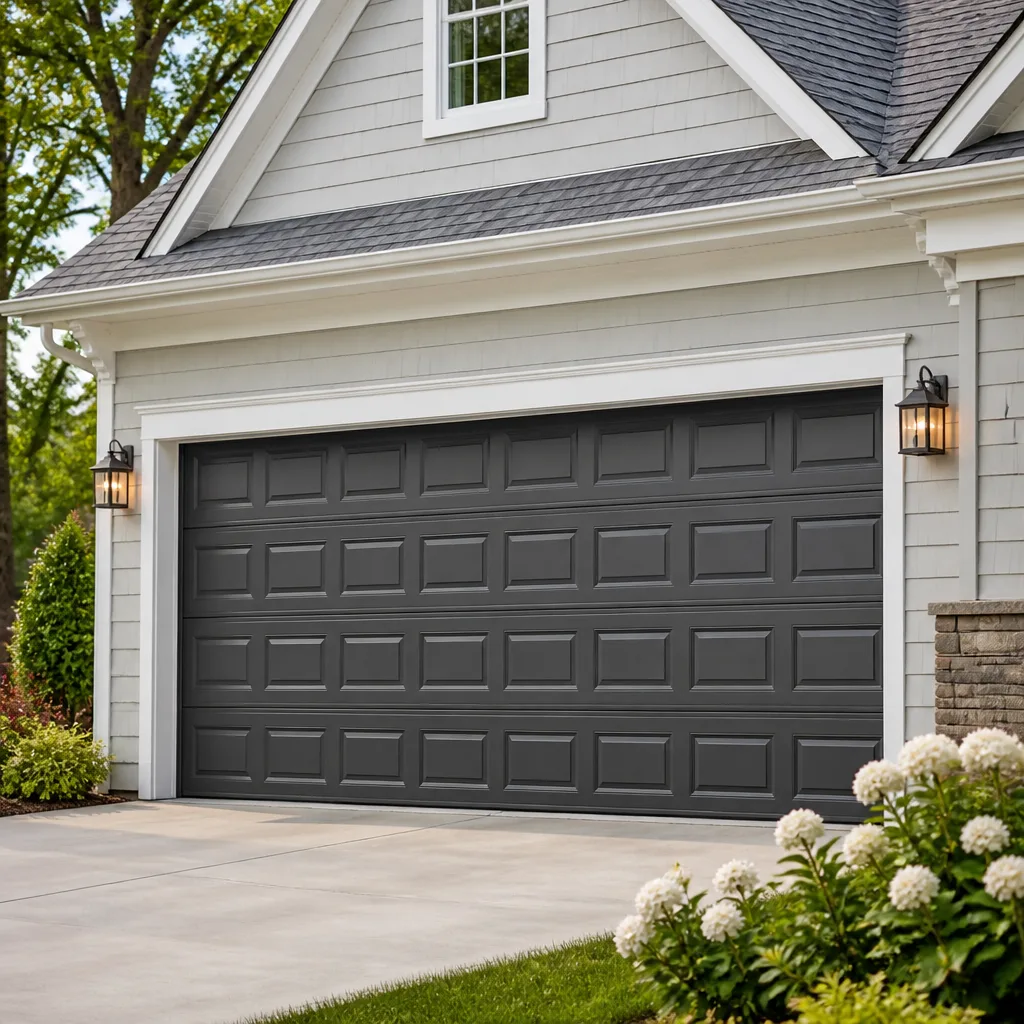 Raised-panel steel
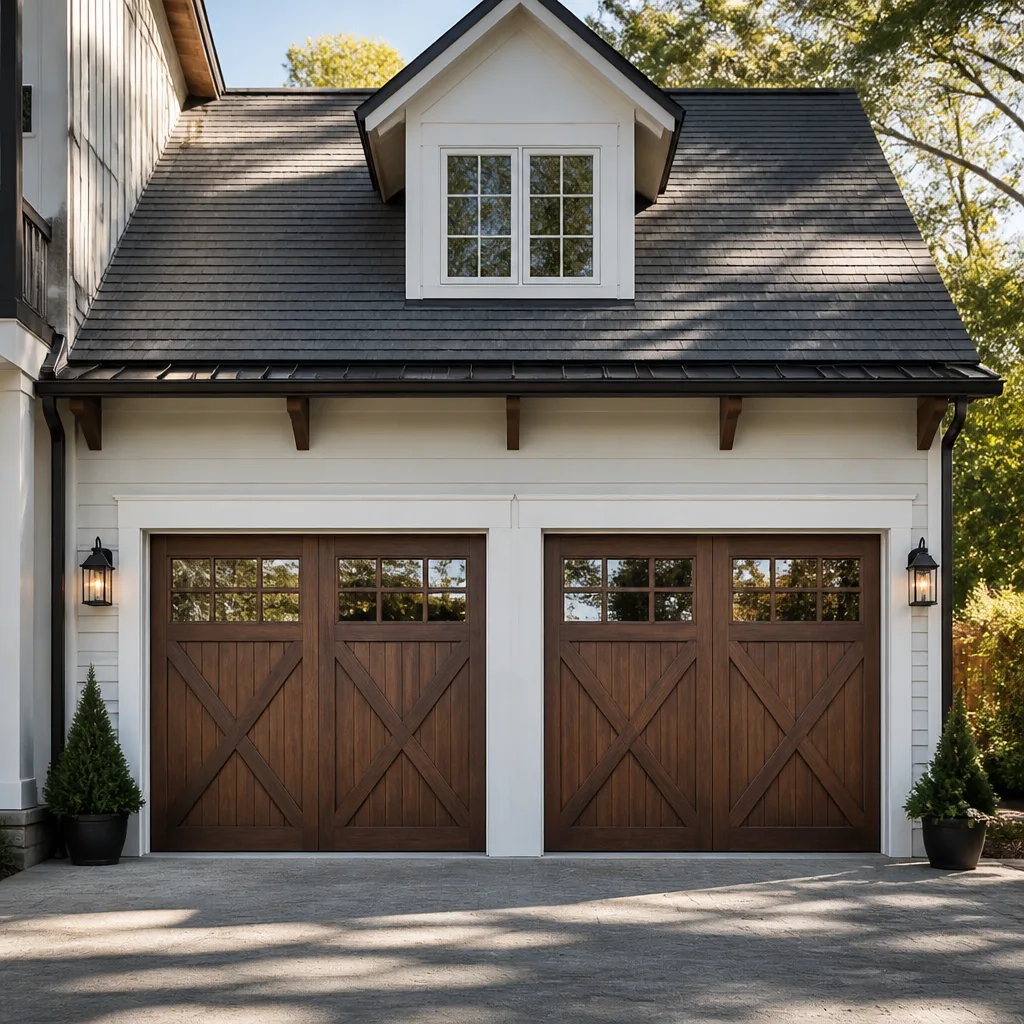 Carriage house
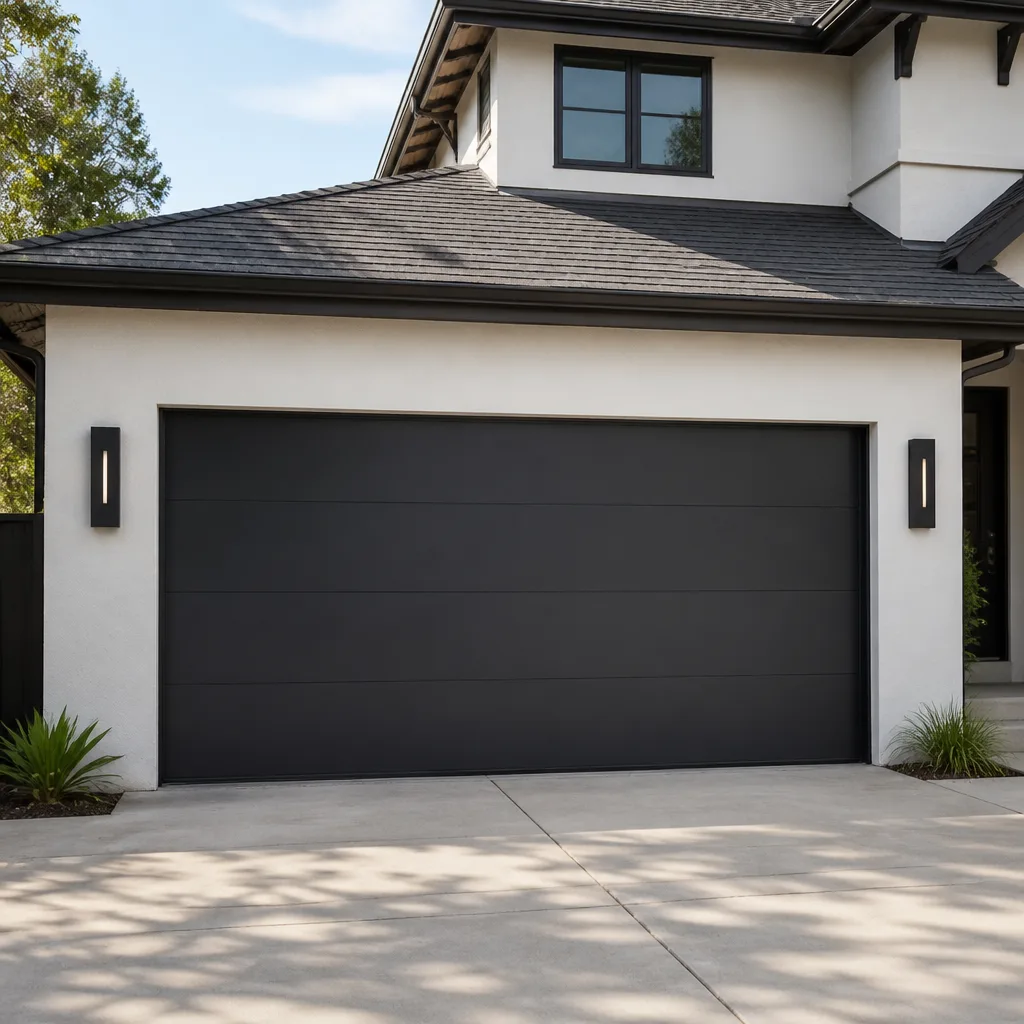 Modern flush
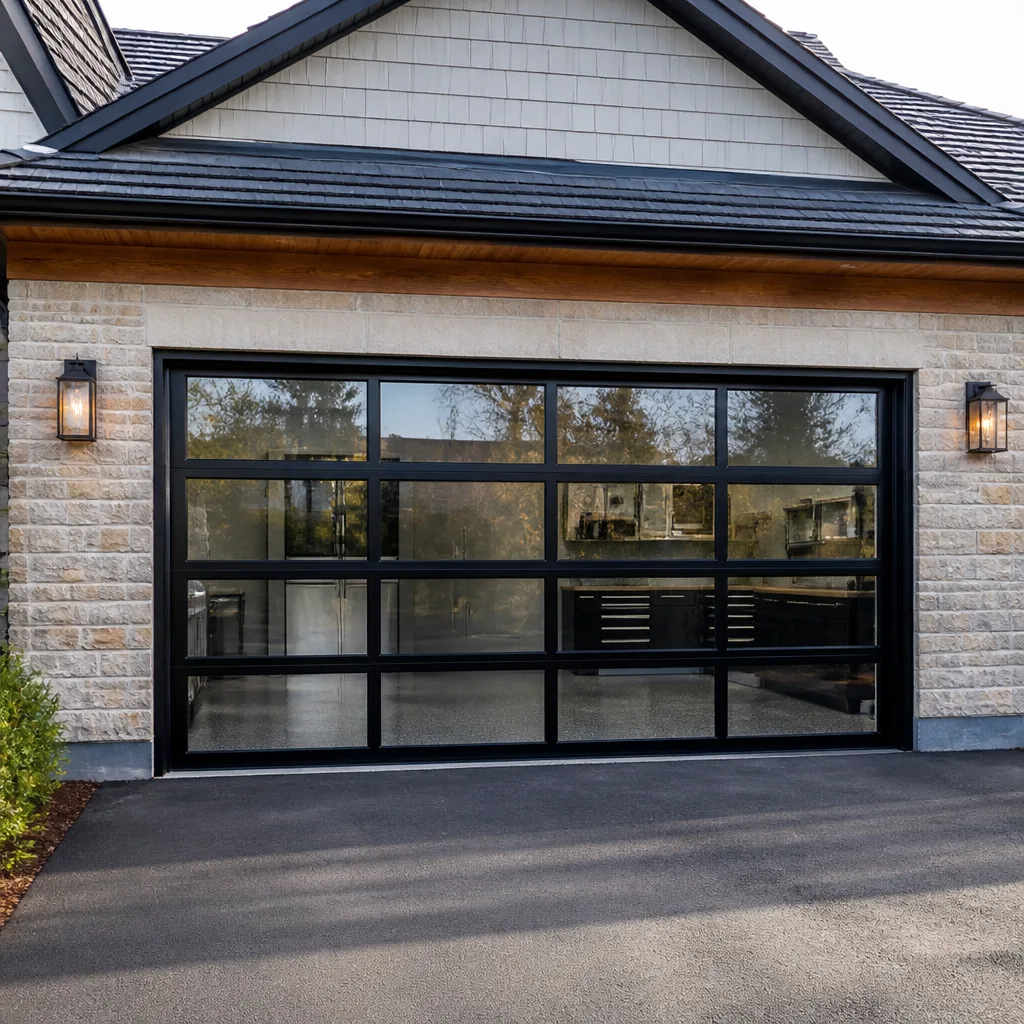 Full-view glass
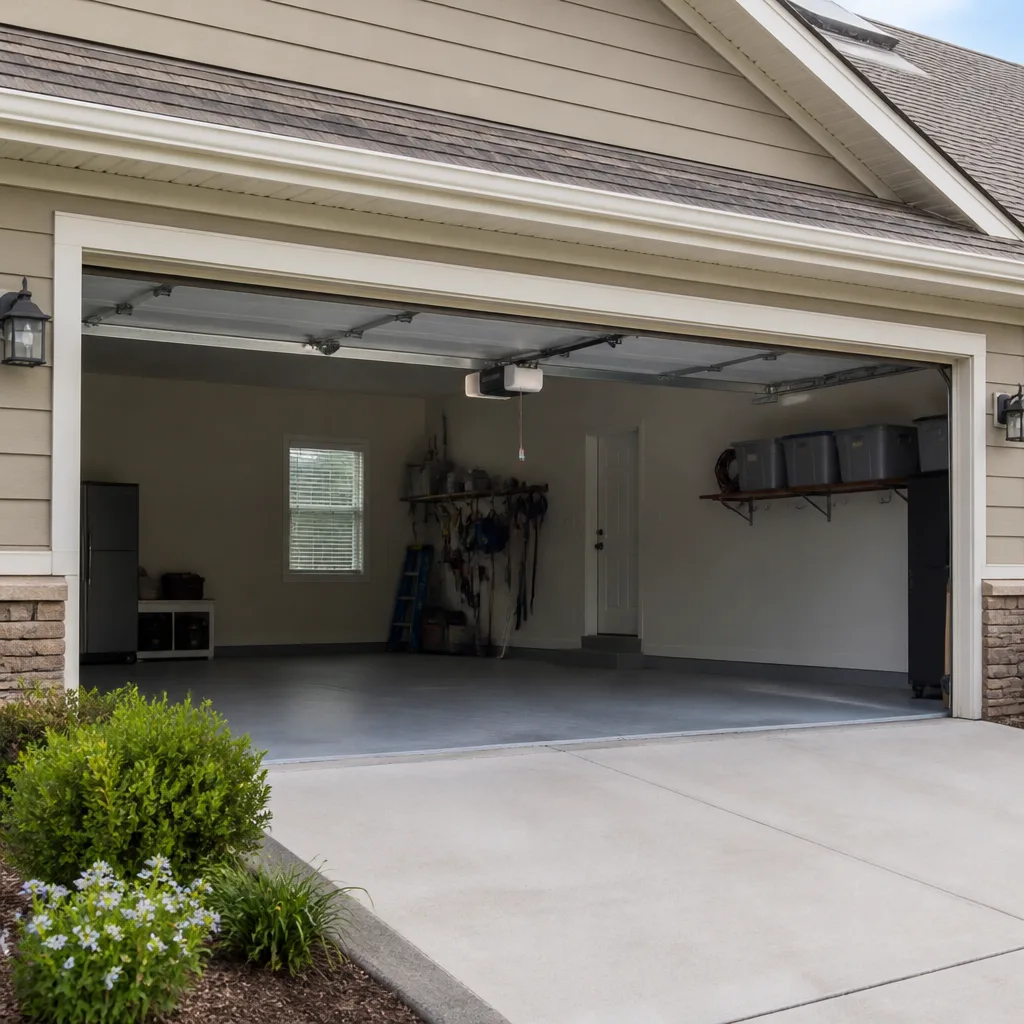 LiftMaster openers
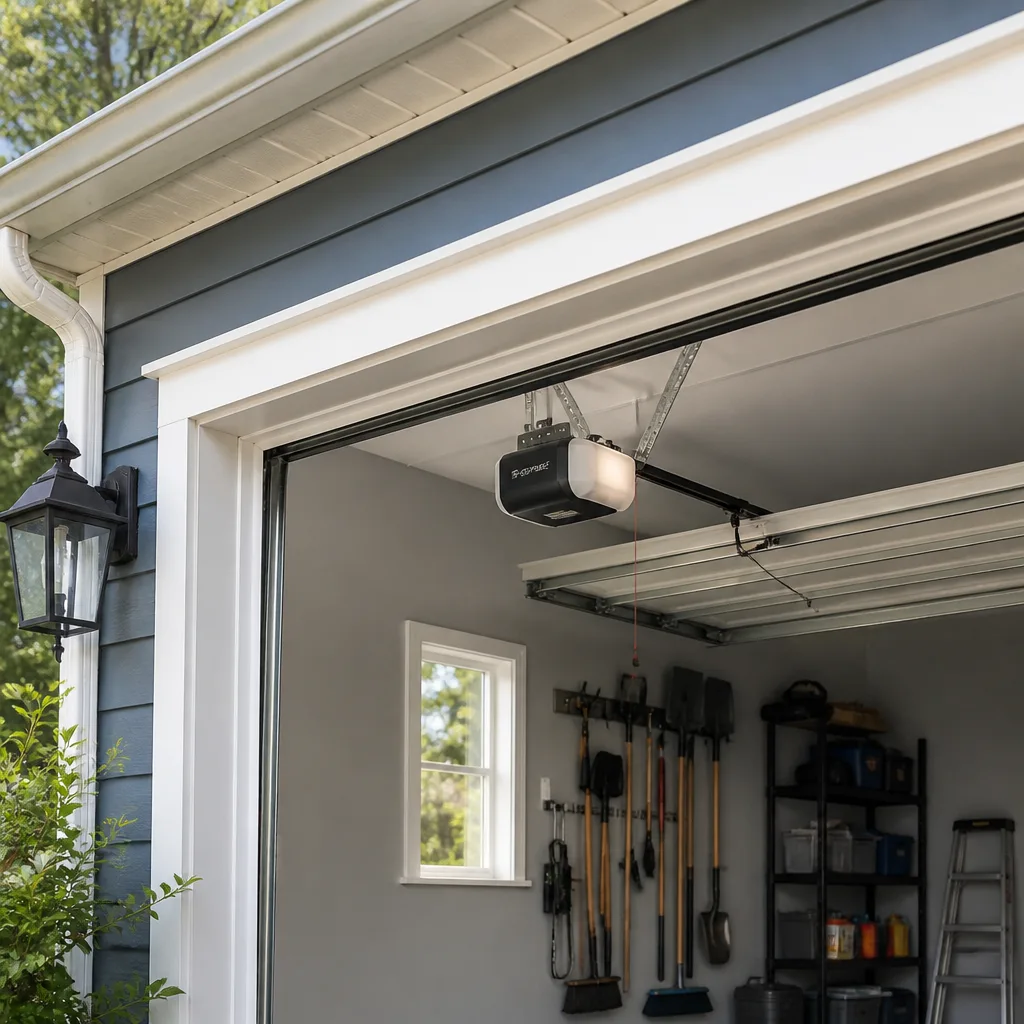 Chamberlain openers
Full 25-point door and opener safety check with every visit - springs, cables, rollers, tracks, and your LiftMaster or Chamberlain opener included
You get a price before we start. It does not change when the pro arrives.
Get your free estimateGarage Door Repair Troubleshooting in Vallejo: Common Problems and How to Fix Them
A door that reverses before it reaches the ground isn’t “acting up.” It’s reporting a specific fault. The safety sensors or the travel limit have drifted, and the door is doing exactly what it was designed to do when it senses something wrong. Most garage door problems work this way: the symptom points straight at one of three mechanical systems – the springs, the tracks, or the opener. The trouble is that most people chase the noise or the slowdown instead of reading what it means. This guide teaches you to read the door’s behavior as a diagnostic signal. You’ll learn which symptom maps to which system, how to isolate door hardware from opener electronics with a manual test, and where a do-it-yourself attempt turns a simple repair into an expensive one. If you live in Vallejo, the local climate adds one wrinkle worth understanding up front.
Quick Answer
Most garage door problems in Vallejo trace back to one of three systems: tired torsion springs, misaligned or bent tracks, or a drifting opener limit or sensor. You can identify which one is failing by watching how the door behaves – a door that reverses mid-travel usually points to sensors or limits, a door that grinds on one side usually points to a track or roller, and a door that won’t lift at all usually points to a spring. Any work involving springs, cables, or the torsion assembly is a hard stop for homeowners; those parts are under extreme tension and cause serious injury when handled without the right tools and training. Call (855) 339-8305 for a free estimate and we’ll tell you exactly which system is at fault.
Styles & brands we work with
- Raised-panel steel
- Carriage house
- Modern flush
- Full-view glass
- LiftMaster openers
- Chamberlain openers
Table of Contents
- The Behavior-to-Cause Matrix: Reading Your Door’s Symptoms
- Why Vallejo’s Carquinez Strait Air Ages Garage Doors Differently
- The Manual Test: Separating Door Hardware From Opener Electronics
- Three Hard Stops: When a DIY Fix Makes the Repair Worse
- What a Technician Checks in the First Five Minutes
- Why Your Door Is Noisy or Running Slow
- Opener Problem or Door Problem? How to Tell
- When to Call a Professional
The Behavior-to-Cause Matrix: Reading Your Door’s Symptoms
Before you touch a single bolt, watch the door. Run it up and down two or three times and pay attention to where in the travel something changes. The location and character of the symptom narrows the cause faster than any other step. Here’s how we map it in the field.
- Reverses before reaching the floor or ceiling. Usually the safety sensors or the opener’s travel limit. If the door stops and reverses at the same point every time, it’s the limit. If it reverses partway down and the sensor lights flicker, it’s the sensor or its wiring.
- Won’t move in one direction but moves fine in the other. Points to the opener’s limit switch or a failing logic board, not the door mechanics. If the door lifts fine but won’t close, the safety beam is the first thing to check.
- Grinds or scrapes on one side. A track that’s been bumped out of alignment, a worn roller, or a bent hinge. The single-sided nature of the sound is the tell – a door-wide problem makes noise on both sides.
- Won’t lift at all, or lifts a few inches and stops. This is the spring signature. A torsion spring that has snapped gives no counterbalance, and the opener strains to lift dead weight it was never designed to carry.
- Shudders and shakes going up. Usually a worn roller, a loose hinge, or a track that’s slightly out of plumb. Rarely dangerous on its own, but it accelerates wear on everything else.
- Hums but doesn’t move. The opener motor is getting power but the drive system (gear, chain, or belt) isn’t engaging. Often a stripped gear in a Craftsman or Chamberlain unit that has seen years of service.
Reading the symptom this way saves time whether you fix it yourself or call us. When a homeowner calls and says “it reverses about two feet off the ground every time,” we know to bring sensor and limit parts. When they say “it grinds on the left side and the door looks crooked,” we know to inspect the left track and roller set first. The description is the diagnosis half the time.
Why Vallejo’s Carquinez Strait Air Ages Garage Doors Differently
Garage doors in Vallejo live in a different climate from doors a few miles inland. The Carquinez Strait funnels moist air off the water through the lower hills, and that moisture settles on the metal parts of a door night after night. Compared with Benicia or inland East Bay cities where the air dries out faster, Vallejo’s torsion spring coils, bottom brackets, and hinge plates accumulate surface rust sooner. We’ve seen springs in Vallejo develop a fine orange bloom on the coils years before the same spring model in a drier town.
Why does that matter for troubleshooting? Rust is a diagnostic clue. A spring with surface rust isn’t necessarily failing – springs are built to tolerate it – but rust plus a door that lifts heavily is a sign the coils are losing their resilience. A bottom bracket with rust creeping into its moving parts plus a door that grinds at the very bottom of travel is a sign the bracket is binding. And a track with rust on the inner rail plus a door that shudders signals that rollers are dragging instead of rolling.
The practical takeaway for Vallejo homeowners is to look at the metal parts of the door at the same time you listen to the door. A symptom that would be purely mechanical in a dry climate has a moisture-and-rust component here. That doesn’t change the repair, but it does change what we look at first when we arrive in Vallejo.
Keep the metal moving parts clean and lightly lubricated on a spring-and-fall check, and you’ll get more years out of the hardware before corrosion does its work. What you shouldn’t do is try to lubricate a torsion spring that’s already failing – more on that below.
The Manual Test: Separating Door Hardware From Opener Electronics
The single most useful troubleshooting step a homeowner can take is to disconnect the opener and operate the door by hand. This isolates the question that matters most: is the problem in the door’s mechanical hardware (springs, tracks, rollers) or in the opener’s electronics (motor, limit switches, safety sensors)? Do this before you call anyone. It takes two minutes and it makes the difference between describing a symptom and describing a cause.
- Close the door and pull the emergency release cord. This is the red-handled cord hanging from the opener’s rail. Pulling it disconnects the door from the opener’s drive system so you can move the door manually.
- Lift the door about halfway and let go. A properly balanced door will hold its position – maybe drift an inch or two, but stay put. A door that drops means the springs are weak or broken. A door that feels very heavy to lift means the same. Don’t force it.
- Push the door down by hand and watch the tracks. A door that binds, scrapes, or needs force to close means the tracks, rollers, or hinges are the problem, not the opener.
- Push the door up by hand slowly and listen. Grinding on one side points to a track or roller on that side. A clunk or pop means a hinge or bracket is loose or worn.
- Reconnect the opener and test it again. If the door moved freely by hand but the opener still fails to run it, the problem is in the opener, not the door. If the door felt heavy or bound by hand, the opener is likely fine and the door mechanics need attention.
That single test separates about eighty percent of service calls into “door problem” or “opener problem” before anyone arrives. It also tells you something important about urgency. A door that drops hard when released has a spring failure, and you should not run the opener on it – the opener will fight the full weight of the door and eventually burn out its gear. Leave that door disconnected and call for garage door repair. If the door is mechanically fine and the opener is the fault, that’s a different visit and a different set of parts, handled through our garage door opener repair line of work.
If the door passed the manual test and the opener is the only thing misbehaving, check the safety sensors next. A small LED on each sensor should be lit steady. Flickering or dark means dirt, a bumped sensor, or a loose wire. If a sensor is dark, wipe the lens and check that nothing has shifted its aim. That’s the one sensor fix most homeowners can do safely. Anything inside the opener’s housing is a different matter – capacitors hold a charge and the drive gears can bite.
Three Hard Stops: When a DIY Fix Makes the Repair Worse
Most garage door issues are safe to investigate. Three of them are not. We flag these on every call because a homeowner who tries to work around them ends up paying more than they would have for the original repair.
- Broken torsion springs. Torsion springs store enough energy to lift a door that weighs hundreds of pounds. When one is under tension or has just snapped, the energy is still in the system until it’s properly unwound. Homeowners are seriously injured by these every year. There is no safe do-it-yourself path here. If you’ve heard a loud bang from the garage and the door won’t lift, leave it alone and call.
- Bent horizontal tracks. A bent track isn’t just a nuisance – it can cause the door to come off its rollers mid-travel and fall. Straightening a bent track by hand or with a hammer rarely works and often makes the bend worse, and a door that drops off a bent track can cause serious injury. A technician replaces the affected track section; that’s the fix, and it’s not a homeowner’s job.
- Frayed or kinked cables. The cables carry the spring’s force to the door’s bottom corners. A frayed cable can snap, and when it does the door can come down on one side. Never touch a cable that looks frayed, kinked, or has broken strands. Even a cable that looks intact should be left alone if the door is under tension.
For all three, the honest advice is: stop, disconnect the opener if the door is still attached, keep the door closed and locked if you can, and schedule a repair. The cost of a proper repair on any of these is well below the cost of an emergency room visit. And it’s well below the cost of a repair after a homeowner’s attempt has bent a track, stretched a cable, or forced a door off its rollers.
Here in Vallejo we also recommend keeping anything stored against the tracks – gardening tools, bins, sporting gear – pulled back a few inches. In a garage that holds as much as most Vallejo homes do, a bumped track is one of the most common avoidable causes of a bent one.
What a Technician Checks in the First Five Minutes
You can run the same checklist before you call. It won’t replace a technician’s eye, but it will either solve the problem or give you a specific, useful description for the call.
- Visual inspection of the springs. Look at the torsion spring above the door – the coiled metal bar. A snapped spring shows a clean gap in the coil. That’s a definitive diagnosis.
- Visual inspection of the cables. Look at both bottom corners where the cable runs to the bracket. Frayed strands, kinks, or a cable sitting loose in the drum are all flags.
- The manual test described above. Disconnect the opener and operate the door by hand. Heavy or free, binding or smooth.
- Track inspection. With the door closed, stand to one side and sight down each vertical track. A track out of alignment with the door’s edge is bent or has shifted. Sight down the horizontal track for the same.
- Sensor and limit check. Look at the sensors near the floor – both LEDs should be lit steady. Then listen for the opener’s reverse point. If the door reverses at the same height every time, that’s the travel limit.
Five minutes of that checklist covers the three systems and gives you a specific answer: which part, which side, and whether the problem is mechanical or electronic. When you call, you can say “the left spring has a gap and the door has no lift,” and we know exactly what to bring. Or you can say “manual test passed, opener runs but reverses at the same height every time,” and we know the visit is a sensor or limit job. Our technicians have up to 11 years of experience, and the description you give is the head start that goes with it.
Why Your Door Is Noisy or Running Slow
Noise and slowness are the two complaints that come up most often, and both are diagnostic. A door that squeals is telling you something is dry or loose. A door that’s slower than it used to be is telling you the springs are tiring or the opener is straining. Neither is an emergency, and both are worth investigating before they become one.
- Squealing or screeching. Metal-on-metal, usually a dry roller or a dry hinge. A light application of garage door lubricant on the rollers, hinges, and the opener’s chain or screw drive (never on the tracks themselves) silences most of it. If the squeal persists after lubrication, a roller’s bearings are worn and the roller should be replaced.
- Rattling or clunking. Loose hinge bolts, a loose opener rail, or worn rollers. Tighten the bolts you can reach and re-check. If the rattle continues, the bracket behind the bolt may have loosened, which is a technician call.
- Grinding on one side. Track misalignment or a bent hinge on that side. This is the one noise you don’t ignore, because a grinding door is wearing out the track and the rollers with every cycle.
- Slower lifting speed. Two candidates: tired springs (the door feels heavy on the manual test) or a straining opener (the door feels light on the manual test but the opener labors). The manual test separates them.
- Slower closing speed. Almost always the opener’s limit setting drifting. A Trailhead Garage Door Repair technician adjusts the limit during an opener visit; it’s a quick adjustment once the travel range is checked.
Lubrication is the one maintenance step that genuinely extends the life of a door and reduces noise. For brands like LiftMaster and Chamberlain opener systems, use the manufacturer’s recommended lubricant on the drive. For the door’s rollers and hinges, a silicone-based garage door lubricant works better than general-purpose oil, which attracts dust. Keep the tracks clean and dry – they’re meant to run metal-on-metal, and lubricating them can actually cause the rollers to slide instead of roll. That’s a mistake we see often in Vallejo, and it accelerates roller wear.
Opener Problem or Door Problem? How to Tell
The manual test from earlier is the primary separator, and it’s worth restating the logic because the two categories lead different lives. If the door moved freely by hand, the mechanics are fine and the fault is in the opener. If the door was heavy or bound by hand, the mechanics are the problem and the opener is likely innocent, though a failing opener on a healthy door can still be broken by the strain of dragging a bad door.
Here’s how we split symptoms further once the manual test is done.
- Opener symptoms. The remote works sometimes and not others. The wall button works but the remote doesn’t (usually a programming or battery issue). The opener hums without moving (usually a stripped gear in a Raynor or Craftsman unit). The door opens fine but the light stays on or the opener beeps without moving. Connectivity to a smart home app drops. All of these are garage door opener repair territory.
- Door symptoms. The door works by hand but the opener strains. The door binds at one height. The door is crooked when it closes. The springs, cables, tracks, hinges, and rollers are all door-side hardware. These are garage door repair territory.
One thing worth flagging for newer opener installations: many LiftMaster and Chamberlain units from the last decade have safety features that will reverse the door if it meets more resistance than it expects. On a door whose springs are starting to tire, that resistance can reach the threshold and the door starts reversing on its own. That’s not the opener failing – it’s the opener detecting a door problem. A homeowner who treats it as an opener fault will replace the opener and still have the reversing door. The manual test catches this every time.
Because we handle both sides of the system, the visit doesn’t get bounced between an opener company and a door company. One call, one crew, one fix – springs to smart openers.
See the difference
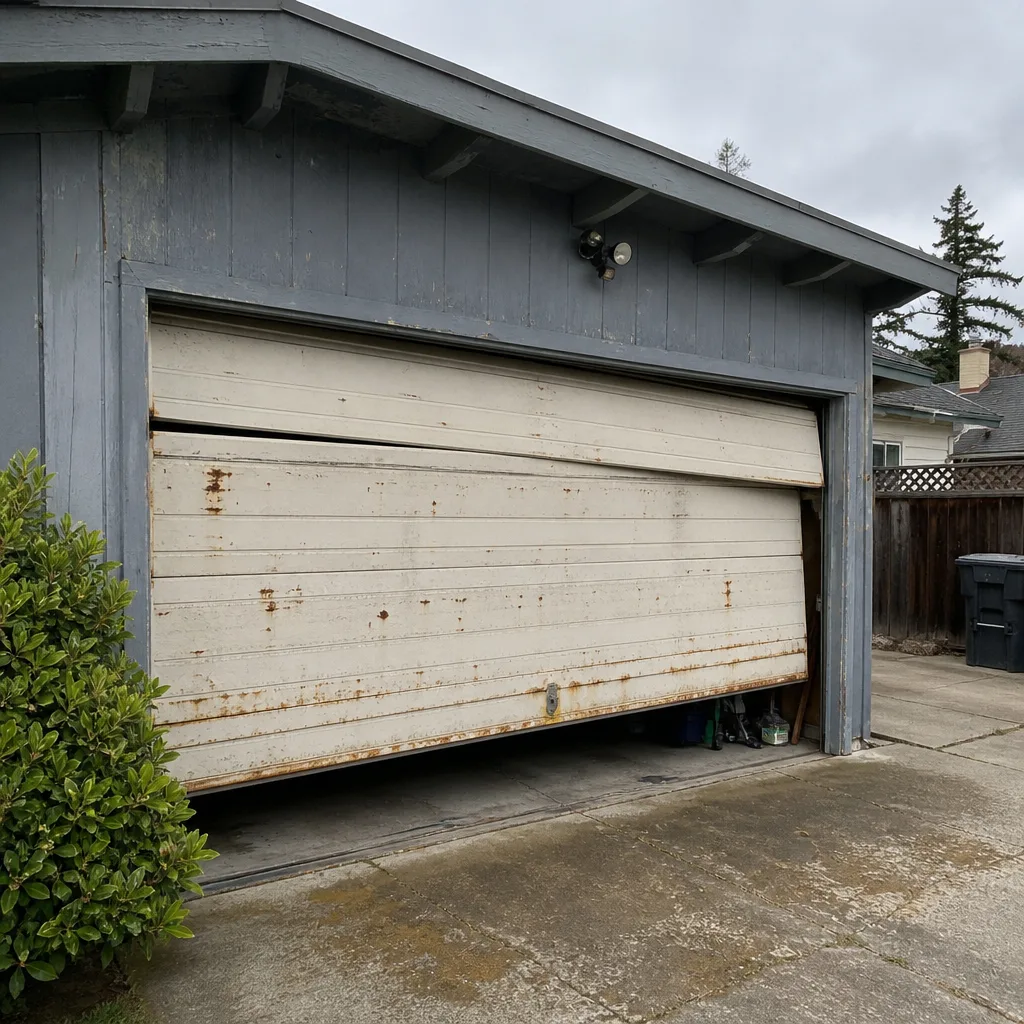 Before
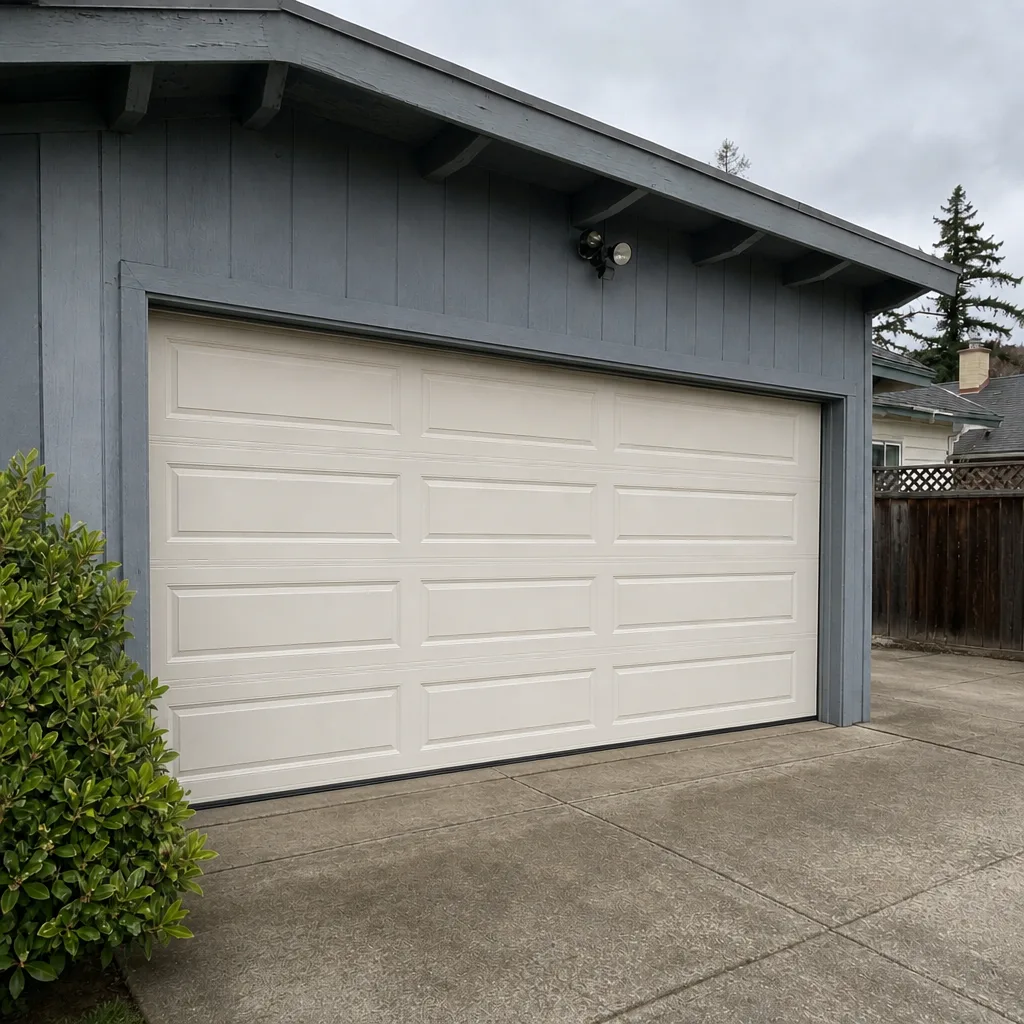 After
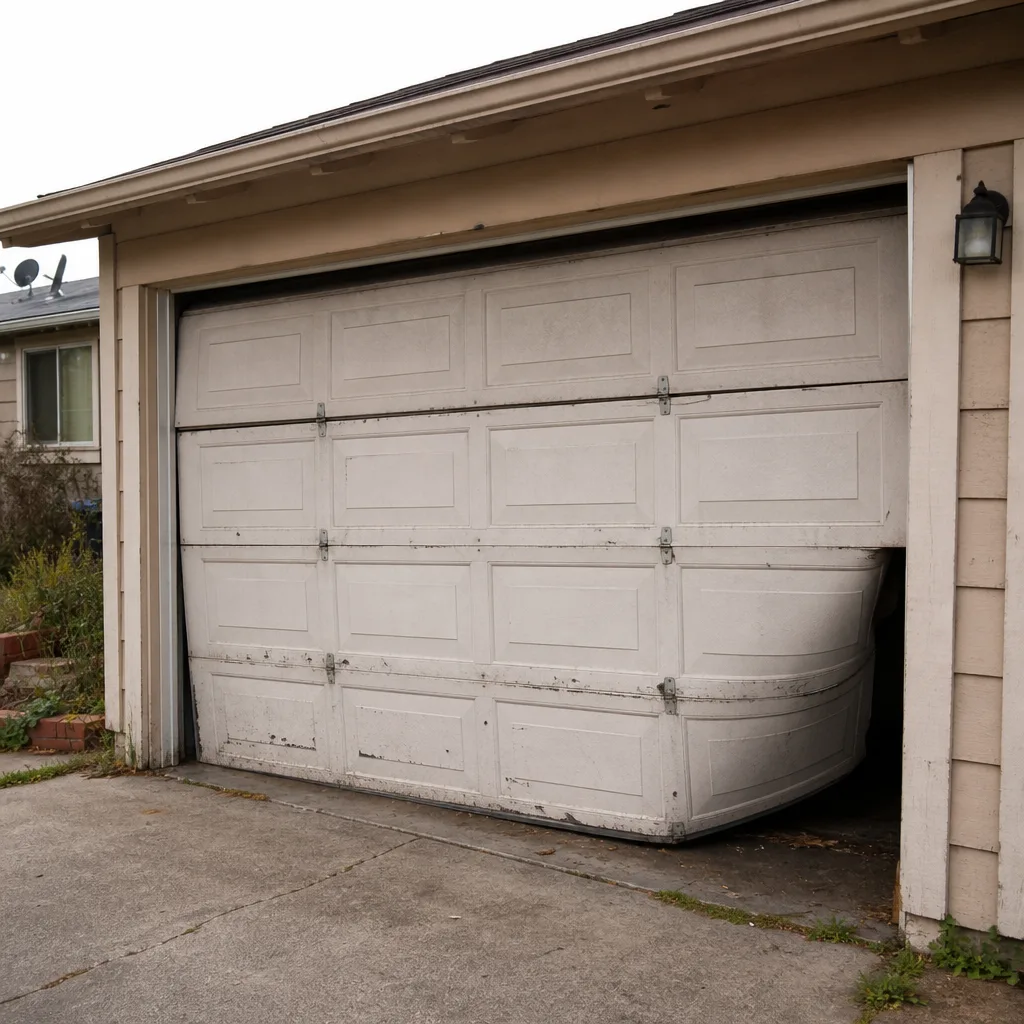 Before
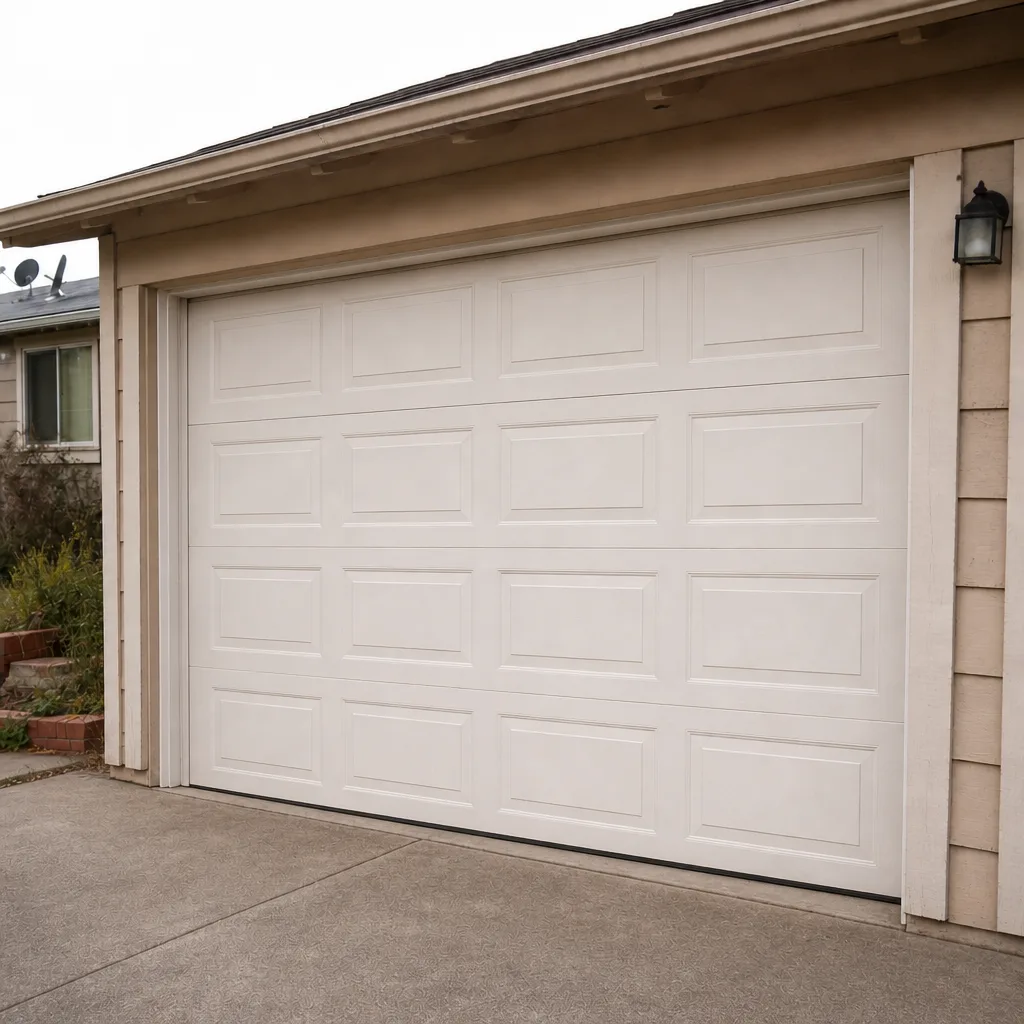 After
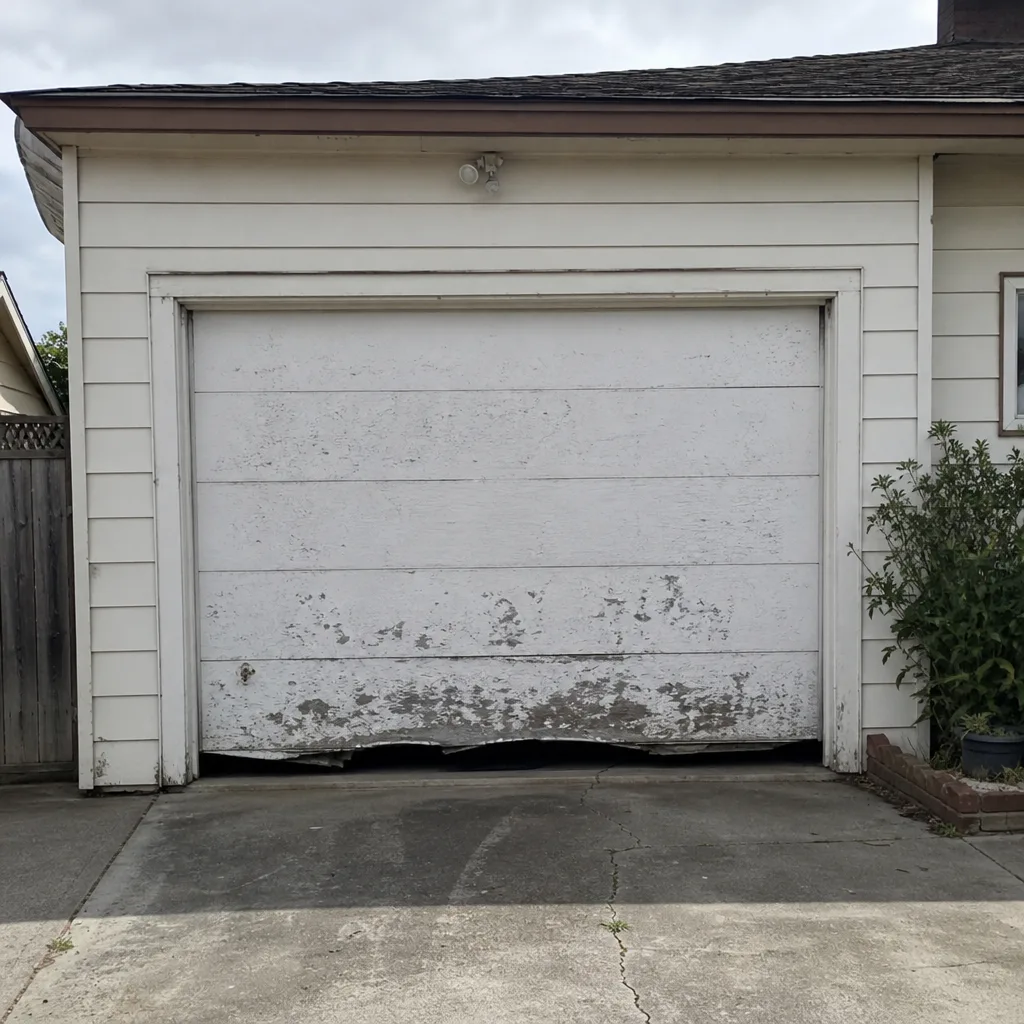 Before
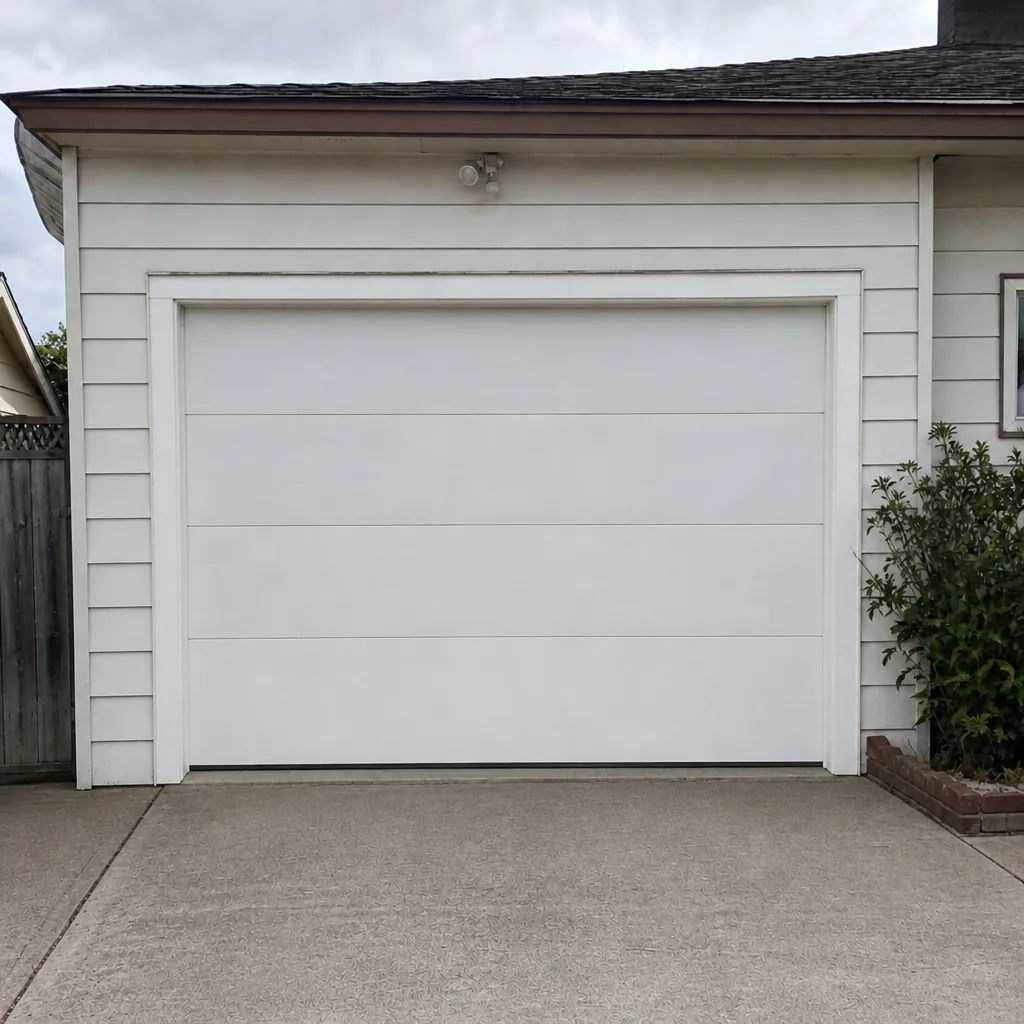 After
Common Mistakes to Avoid
- Running the opener on a door with a broken spring. A torsion spring lifts most of the door’s weight. When it snaps, the opener is left dragging several hundred pounds. The gear strips or the motor overheats within a few cycles. Disconnect the door and leave it disconnected until the spring is fixed.
- Lubricating the tracks. The tracks are meant to be clean and dry so the rollers roll instead of slide. Lubricant on the rails turns rolling into sliding, which wears the rollers and causes the door to shudder. A dry track plus lubricated rollers is the right combination.
- Straightening a bent track with a hammer. Tracks are engineered to precise alignment. A hammer won’t restore it, and a door that comes off a bent track can fall. Replace the section instead.
- Replacing the opener to fix a door problem. A door that reverses on its own, or one that labors in one direction, is usually a door problem that a new opener won’t fix. Run the manual test first.
- Ignoring one-sided grinding. Grinding on one side is a track or roller wearing out fast. Every cycle wears it further. In a Vallejo garage where the door runs several times a day, that wear compounds.
- Adjusting the safety sensors by eye without checking both lights. Dowel alignment matters more than the aim of the bracket. Both LEDs need to be lit steady before you trust the sensors.
- Letting rust sit on the spring coils. Vallejo’s moist air from the Carquinez Strait accelerates surface corrosion. A light clean-and-lubricate routine on the door’s metal parts slows it down and lets you spot spring problems earlier.
When to Call a Professional
Call a professional if you see a gap in the torsion spring, a frayed cable, a bent track, or a door that drops hard when released. Call if the door is crooked when closed, if the opener hums without moving, or if the manual test shows the door is heavy enough that you can’t lift it with one hand. Call if a repair you’ve tried hasn’t solved the symptom within one attempt – a repeat visit is more expensive than a first visit. And call if you simply want a specific diagnosis with an exact cause before deciding what to do. Trailhead Garage Door Repair offers free estimates in Vallejo – call (855) 339-8305. We’re trained on LiftMaster, Chamberlain, Genie, Clopay, Amarr, Wayne Dalton, Craftsman, and Raynor, so we already know your system.
Frequently Asked Questions
It’s usually the safety sensor or the opener’s travel limit. If the door reverses at the same height every time, the travel limit has drifted and the opener needs adjusting. If the reverse is intermittent or the sensor LEDs flicker, the sensors are dirty, bumped, or the wiring has loosened. Both cases are safe to diagnose. Call (855) 339-8305 for a free estimate if you’d rather have a technician confirm the cause.
Look at the coiled spring above the door. A snapped torsion spring shows a clean gap in the coil – you’ll see two separate pieces with a space between them, and often a rust ring at the break point. The door will also be too heavy to lift by hand. A broken spring is a hard stop for homeowners: do not run the opener and do not try to work on the spring. Call (855) 339-8305 for a free estimate and we’ll schedule the repair.
Grinding on one side almost always points to a track that’s been knocked out of alignment or a bent hinge on that side. The single-sided nature of the noise is the clue – a bind on both sides would be a different diagnosis. Never straighten a bent track with a hammer; a door that comes off a bent track can fall. Call (855) 339-8305 for a free estimate and we’ll inspect the affected track and hardware.
Yes for some things, no for three. Lubricating rollers and hinges, checking sensor LEDs, replacing a remote battery, and adjusting the opener’s travel limit are all safe homeowner tasks. Never touch the torsion springs, the cables, or a bent track – each can cause serious injury. Most cities also require a permit for structural door work, so ask Vallejo’s building department if you’re planning anything beyond routine maintenance. Call (855) 339-8305 for a free estimate if you want a specific problem diagnosed.
Once every few months is a reasonable rhythm, and especially at the change of seasons when the Strait air is at its moistest. The check itself is visual: a quick look at the spring coil for a gap, at the bottom corners for frayed cable strands, and at the tracks for rust or misalignment. None of these checks require tools. Anything more than a look is a technician call. Call (855) 339-8305 for a free estimate if you’re unsure what you’re seeing.
No. The price is quoted and agreed before any work starts, in writing, and that written estimate sets the final price. We don’t quote over the phone without seeing the door, and we don’t quote at the door without confirming the cause. If the diagnosis changes what’s needed, we re-quote before starting, never after. Call (855) 339-8305 for a free estimate.
The Bottom Line
Most garage door problems in Vallejo are one of three systems acting up: springs, tracks, or opener. The door tells you which one if you read the symptom. Reversing at a fixed height means limit or sensor. One-sided grinding means track. Won’t lift by hand means spring. The manual test – disconnect the opener, operate the door by hand – separates door hardware from opener electronics in two minutes. Then three things are hard stops for any homeowner: broken springs, bent tracks, and frayed cables. Everything else is worth investigating, and a specific description of the symptom gets a faster, cheaper repair than a vague one. If you’d rather skip the diagnosis and get a straight answer, we’re the right starting point.
Trailhead Garage Door Repair handles the entire system – door mechanics, opener drive, and smart-opener diagnostics – through three focused service lines. We’re trained on the eight brands covering most homes: LiftMaster, Chamberlain, Genie, Clopay, Amarr, Wayne Dalton, Craftsman, and Raynor. One call, one crew, one fix. Our technicians have up to 11 years of experience, and the estimate is free. If your door is telling you something and you’d rather have a technician listen to it with you, call (855) 339-8305. We answer 24/7. Fast dispatch from 7am to 7pm, Sunday through Friday.
Written by the team at Trailhead Garage Door Repair.